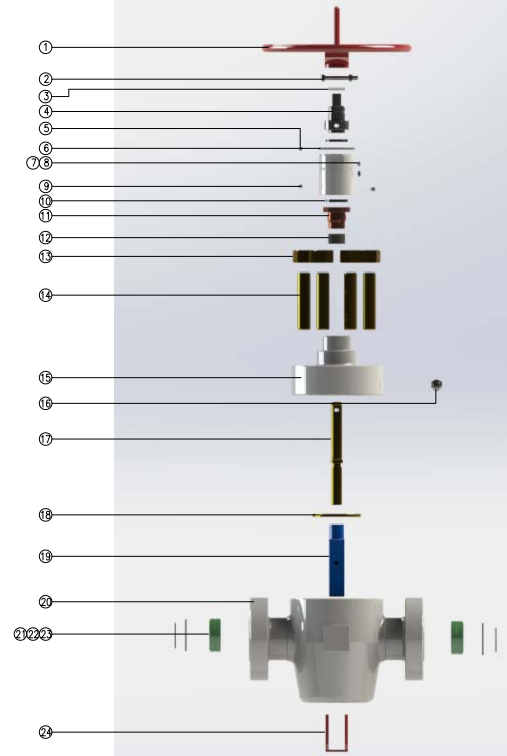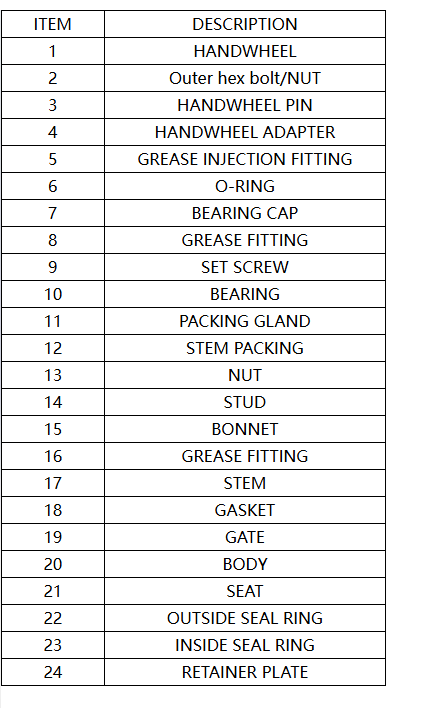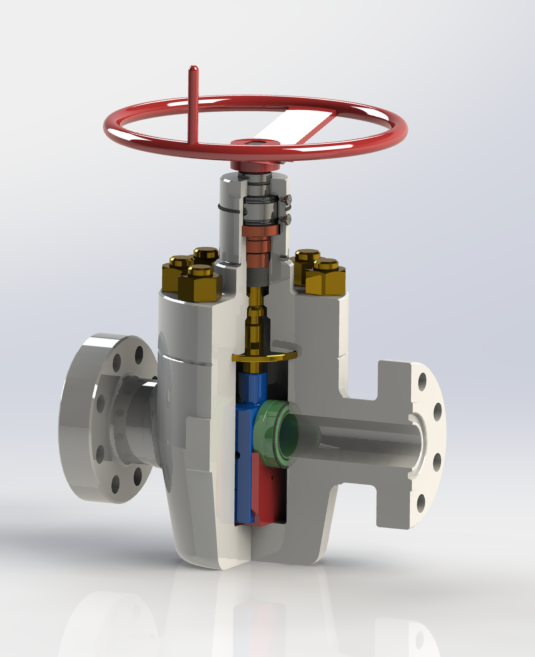
Structure and characteristics:
FLS valves are full-bore valves designed and manufactured according to API 6A and NACEMR-01-75 standards. They are suitable for standard double-end flange connections, threaded connections, and feature a unique one-piece valve body construction. Below are the standard characteristics of FLS gate valves:
1.1.1. The seals between the valve plate and the valve seat, and between the valve seat and the valve body, are metal-to-metal seals.
1.1.2. The simplified gate and seat assembly minimizes the number of components. The integral seat and block gate make the valve seal more reliable and maintenance simpler. The improved transmission thread between the gate and the valve stem allows the valve plate to move back and forth and up and down to achieve a seal with the valve seat.
1.1.3. The gate and seat assembly is bidirectionally sealed, and the gate and seat can be interchanged for use to extend their service life.
1.1.4. The boss on the valve stem can achieve a seal with the valve cover, isolating the packing box from the pressure source, so that the valve stem seal can be replaced when the valve is under pressure in the field.
1.1.5. Non-lifting valve stems prevent pressure rise in the valve chamber and grease discharge from the valve chamber.
1.1.6. All FLS valves feature a special metal-to-metal seal, grease-filled valve containing a check valve. The valve stem, gate, and seat are all lubricated through this grease-filled valve. For safety, this grease-filled valve is located downstream of the valve stem back seal. The sealant or grease outlet does not extend directly into the valve cavity.
1.1.7. The seal between the valve body and the valve cover is achieved by pressure. Valves with working pressures of 10,000 PSI and 15,000 PSI use BX type metal valve cover steel rings; valves with working pressures of 3,000 PSI and 5,000 PSI use flat, compression type metal gaskets.
1.1.8. These valves fully comply with API 6A material and temperature ratings; additional special adjusting shims are provided upon request. For valves of standard size and pressure, reduced-hardness bonnet bolts are available without lowering the operating pressure.
1.1.9. With slight modifications, FLS valves can meet the fire safety requirements of API 6FA.
1.1.10. The special non-rubber stem seal design allows the standard rated temperature of the FLS gate valve to be increased from -60℃ (-75℉) to 176℃ (350℉), and even below -60℃ (-75℉). However, these rated temperatures are not applicable to all operating pressures.
1.1.11. Large-diameter FLS valves can provide additional force-saving mechanisms to reduce valve operating torque.
1.1.12. The materials and descriptions of valve components are shown in the material list for the valve assembly.